
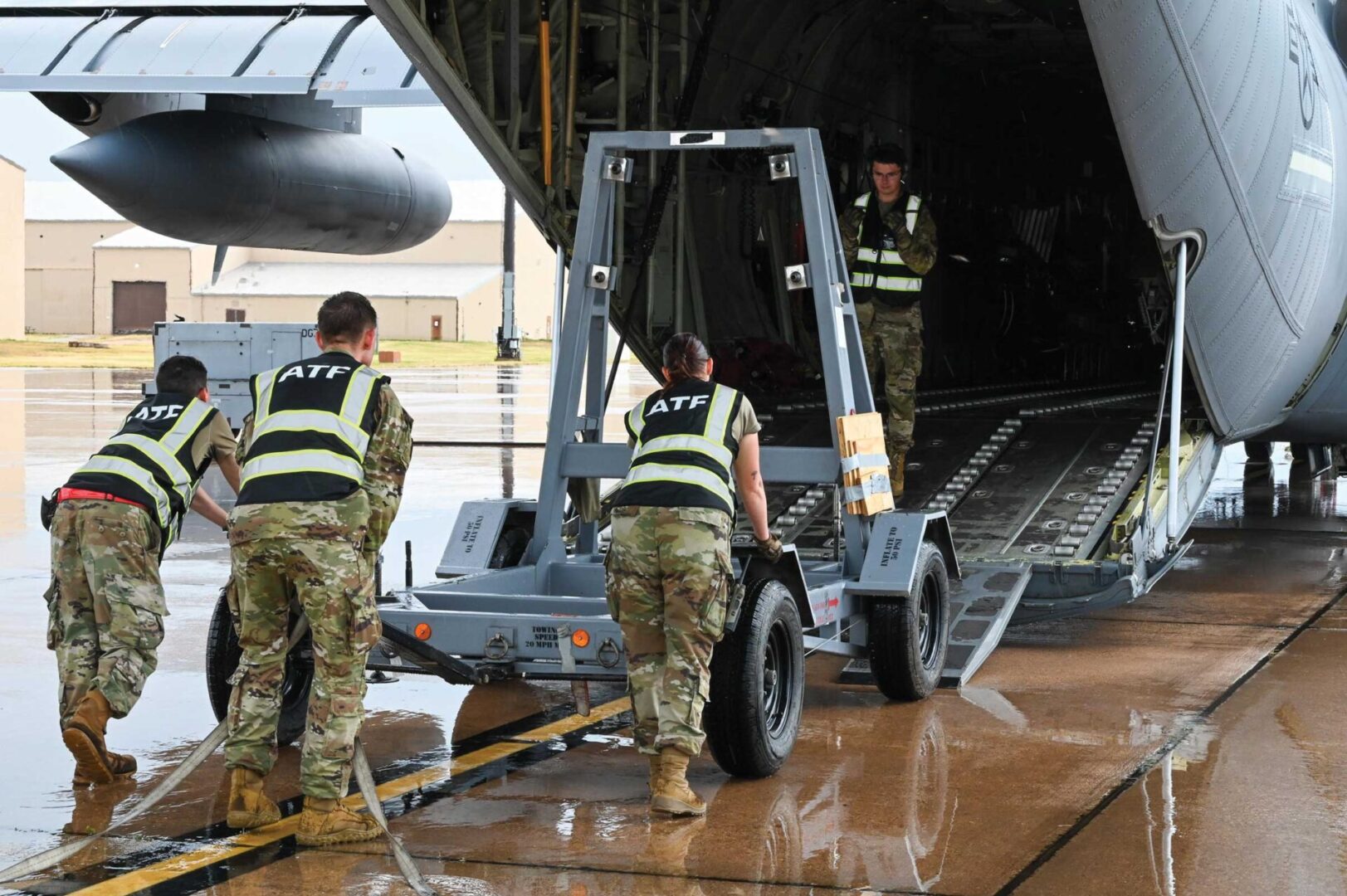
A Reflection on Safety: Protecting Airmen on the Flightline and in the Warehouse
By Ms. Petra J. Oliver, 727AMS/SE, USAF
The flightline—a realm of roaring engines and precise operations—and the warehouse—a bustling hub of logistics with forklifts and constantly moving pallets and packages—both demand unwavering focus from users and, above all, stringent safety measures. Yet, when it comes to ensuring adequate visibility for our Airmen in these high-risk environments—particularly amid heavy equipment, variable lighting conditions, and fast-paced operations—a critical question arises: Are we truly doing enough?
Current guidance for flightline operations in inclement weather often focuses on the use of a reflective belt; however, in warehouse environments, there seems to be a lack of specific guidance. Although the Air Force Instruction (AFI) mandates reflective clothing around traffic, this protocol is open to interpretation (e.g., does “traffic” include aircraft on the flightline?). More importantly, how does this instruction apply to hazards in a warehouse setting?
The U.S. Air Force (USAF) maintains well-established safety standards and regulations. The Occupational Safety and Health Administration (OSHA), through its General Duty Clause, also requires employers to provide workplaces free from recognized hazards that may cause serious harm or death. This implicitly includes ensuring adequate worker visibility in hazardous environments such as the flightline and warehouse.
Furthermore, the American National Standards Institute/International Safety Equipment Association (ANSI/ISEA) 107 standard provides specific performance criteria for high-visibility (Hi-Viz) safety apparel designed to minimize the risk of struck-by incidents. This standard categorizes materials as background (fluorescent for visibility), retroreflective (reflecting light back to the source), or combined performance (fluorescent and retroreflective properties) fabrics. These materials must be certified by an independent laboratory to verify compliance.
ANSI/ISEA 107 defines three performance classes of Hi-Viz clothing, along with a fourth (Class E) for standalone trousers. In general, the higher the class, the greater the amount of reflective and fluorescent material required. For instance, combining Class E pants with a Class 2 or 3 garment effectively creates an overall Class 3 level of protection.
However, the limitations of a reflective belt are glaring. At approximately two inches wide, the belt often disappears beneath uniform shirts and relies on the presence of light to be effective. Without light, the belt’s effectiveness is severely reduced.
A stark contrast exists between USAF practices and those beyond the installation fence. At civilian airports, personnel are often clad from head to toe in Hi-Viz clothing whilst working on the flightline. Yet, inside the wire, Airmen frequently wear camouflage uniforms with only a reflective belt. While concealment is understandable and a priority in deployed locations, the same justification does not apply in the Pacific Air Forces, U.S. Air Forces in Europe-Air Forces Africa, and Continental United States, where commanders have the authority to implement stronger safety measures.
The disparity extends to warehouse safety protocols. In most non-automated warehouses, Hi-Viz apparel is mandatory personal protective equipment (PPE). USAF prioritizes steel-toe boots (to protect toes), gloves (to protect hands), and ear protection (to protect hearing). Yet, comparatively, little attention is paid to protecting torsos, legs, and arms—vital body parts essential to mission performance. While a toe injury may be debilitating, injuries to major limbs or the torso can be life-altering.
The opportunity to strengthen PPE policies and safety standards (i.e., implementing additional proactive measures) is clear. A comprehensive review of USAF safety policies, along with relevant AFI and ANSI/ISEA 107 standards, would provide clear, more enforceable guidelines for Hi-Viz clothing on the flightline and in warehouse environments.
Ultimately, safety is not only about regulatory compliance; it is about valuing the Air Force’s most valuable asset—its Airmen, each of whom deserves the highest level of protection available to ensure they return home safely at the end of each shift.