
Planning, Partnership, and Power Projection: Inside MG25
By Ms. Lauren Fosnot, Staff Writer
Mobility Guardian 2025 (MG25) is more than the Air Mobility Command’s (AMC) flagship exercise—it showcases the global reach and scale required to project power in today’s contested environments. As part of the U.S. Air Force’s 2025 Department-Level Exercise (DLE) series, and as the fifth iteration of AMC’s biennial exercise, MG25 unfolded for the second time in the U.S. Indo-Pacific Command’s vast theater, demonstrating the Air Force’s ability to project power at speed and scale. With more than four hundred joint and coalition aircraft and more than twelve thousand personnel spread across fifty locations and three thousand miles, the exercise’s success rested on two pillars: the meticulous planning backbone provided by organizations like the 618th Air Operations Center (AOC) and the dedication of the Airmen executing missions on the ground, in the air, and across the command-and-control enterprise.[1]
The Planning Backbone—the Role of 618 AOC
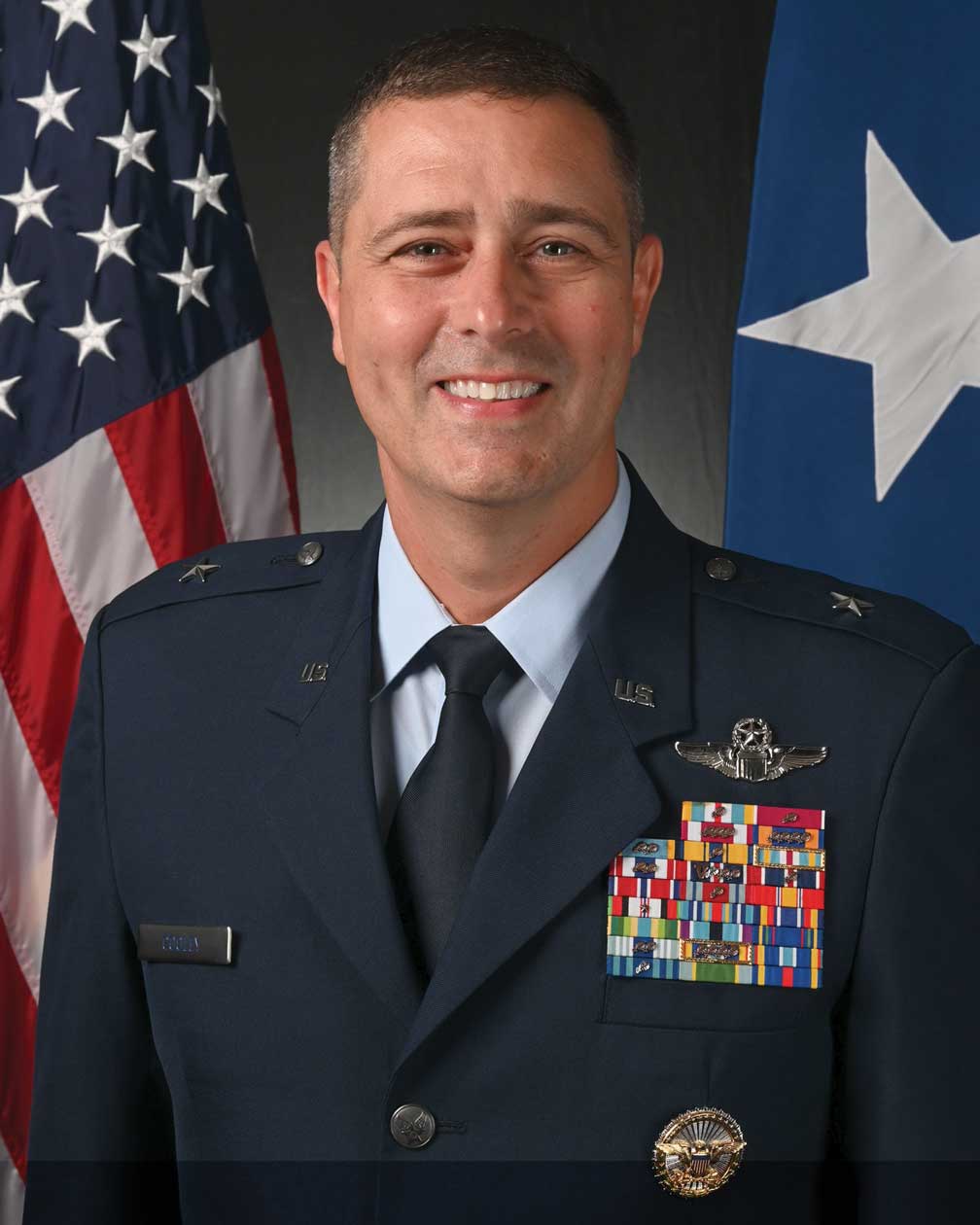
Brig Gen Charles “Dan” Cooley, Commander of the 36th Wing at Andersen Air Force Base (AFB), Guam, and former Deputy Commander of 618 AOC at Scott AFB, IL, affirmed the critical nature of 618 AOC in planning and executing hundreds of daily global mobility missions. He noted that the 618 AOC team played a central role in orchestrating rapid force flow and seamless integration with joint, allied, and partner forces during MG25.
Cooley explained that those planning efforts ensured that Agile Combat Employment (ACE), operational sustainment through the global logistics enterprise, and the simultaneous deployment of forces were executed effectively across the Indo-Pacific—efforts that came together as part of MG25 and Resolute Force Pacific, both nested under the U.S. Air Force’s larger DLE series.
Testing Limits at Scale
Cooley contributed to early planning while serving as Deputy Commander of 618 AOC, then assumed command of the 36th Wing at Andersen AFB shortly before the exercise began. This transition gave him a rare vantage point from both the planning and execution sides of MG25, which was built upon lessons from previous iterations and marked a significant leap in scope and complexity.
Cooley explained that the event, falling under the DLE series, demonstrated the Air Force’s ability to enter theater environments, conduct ACE at scale, and sustain operations with regional allies and partners. Unlike traditional exercises, he noted that MG25 tested command and control across an expansive area covering Guam, Australia, Japan, Hawaii, and international airspace. This exercise created challenges and opportunities, forcing teams to synchronize at higher levels and refine emerging concepts of operations in a truly realistic environment.
As the 36th Air Expeditionary Task Force (AETF) Commander during the exercise, Cooley was responsible for leading an Air Task Force and three Air Expeditionary Wings, each with diverse mission generation force elements, such as expeditionary fighter squadrons, to execute Theater Joint Force Air Component Commander priorities.
This exercise was the first large-scale execution of 36 AETF, modeled after a command headquarters’ battle staff and designed to serve as the foundational echelon for employing ACE within a theater cluster.
“Exercising this construct across commands, theaters, and in partnership with allies and partners strengthened the connective tissue needed to respond to contingencies with speed, efficiency, and unity of effort,” Cooley said.
Key Lessons and Insights
MG25 reinforced several key insights that will shape future large-scale operations. First, it solidified the need for rapid agile force projection and sustainment across vast distances, with logistics that are “as flexible as they are reliable,” Cooley explained. Second, seamless integration with joint, allied, and partner forces proved critical. Third, it demonstrated that command and control in a distributed, multidomain environment must remain adaptive, resilient, and capable of synchronizing real-time complex operations.
The scale of MG25 ensured Airmen understood how their individual roles fit into a larger integrated mission, and its lessons will guide future planning and training to sustain the Air Force’s ability to operate at scale in any scenario. Cooley emphasized that this drive for optimization does not diminish AMC’s current strength.
“Make no mistake, we have the capability and capacity to explode into theater at speed and scale today, if required,” he said.
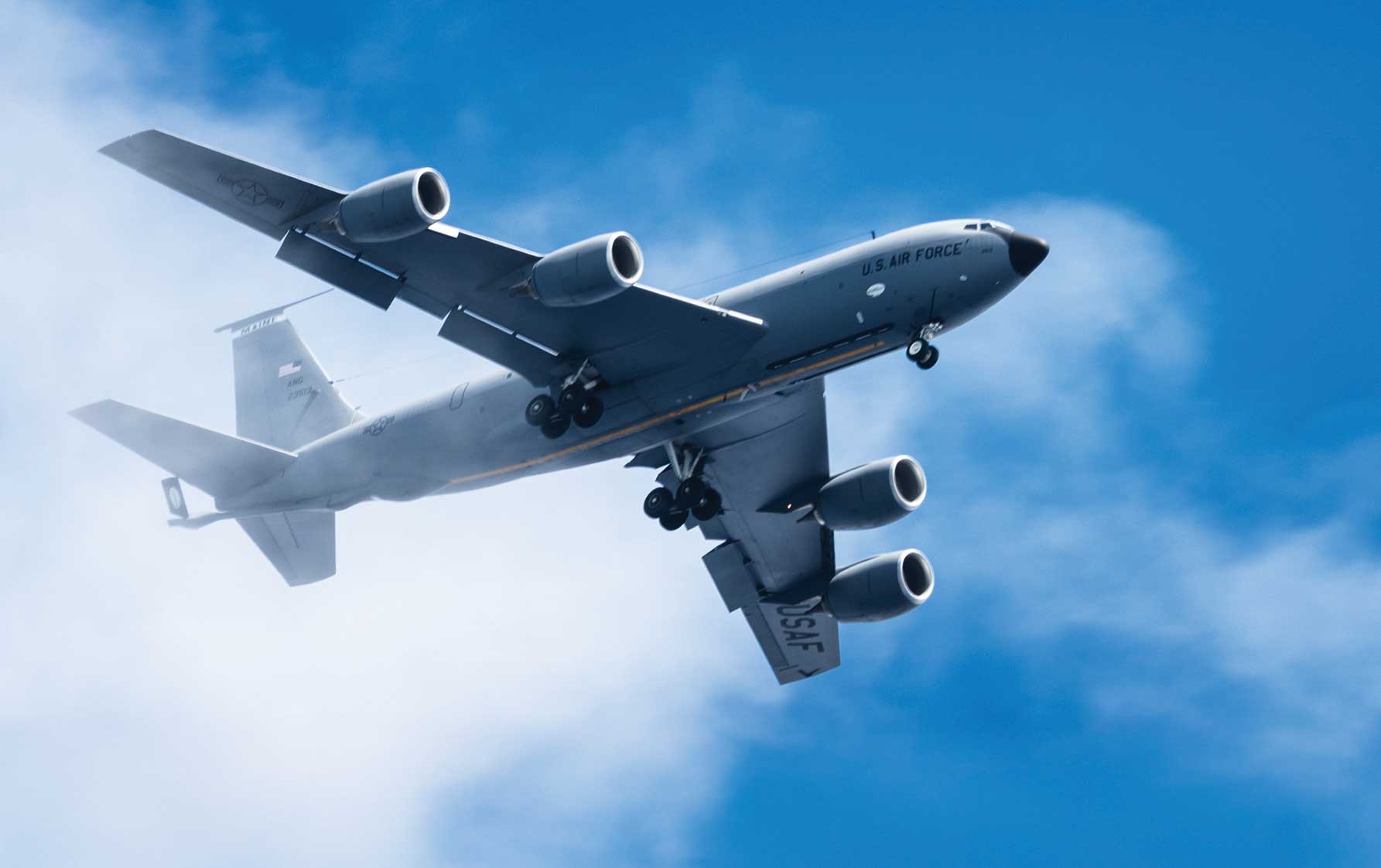
In a matter of days, the 36 AETF MG25 teams received, processed, and employed more than 3,400 personnel and more than ninety fighter, bomber, tanker, mobility, and intelligence, surveillance, and reconnaissance aircraft at Andersen AFB.
Evolving Training Priorities
The Air Force always aims higher, continually adapting its training to prepare Airmen for the challenges of tomorrow. Drawing on his observations from MG25, Cooley emphasized that training priorities for Airmen must continue evolving to meet the demands of complex, high-tempo operations. DLE offered more than just a rehearsal of tactics; it provided a proving ground where Airmen and assets could sharpen their ability to respond rapidly and effectively to dynamic challenges.
This training sharpened individual proficiency while reinforcing teamwork, interoperability, and mission readiness—qualities he sees as vital to maintaining a free and open Indo-Pacific.
“Moving forward, we will continue to focus on developing adaptive, resilient Airmen capable of operating seamlessly across multiple domains with our allies and partners,” he explained.
Exercises like MG25 are not endpoints but catalysts driving the Air Force toward greater readiness and resilience.
From World War II to Vietnam, and now, to Mobility Guardian 2025, Andersen AFB has consistently proven its value as a strategic hub in the Indo-Pacific. The lessons of MG25 reaffirmed the importance of this location and its enduring role in sustaining global reach and power projection. For Cooley, the exercise was not only a test of readiness but also a clear reminder that integration, agility, and strong partnerships are the cornerstones of success in today’s contested environments. Just as 618 AOC provided the meticulous planning backbone to make MG25 possible, Andersen AFB provided the operational muscle to bring that planning to life.
“The success of the DLE reflects more than just successful mission execution . . . it’s a testament to the strategic value our Airmen deliver . . . the mission starts and ends with them. Their professionalism and commitment enabled seamless integration with the Joint Force, directly advancing our nation’s security objectives while also ensuring the Air Force remains a credible force in an increasingly complex environment,” reflected Cooley.
For Cooley, that professionalism and dedication—combined with the enduring legacy of Andersen AFB and the lessons learned from MG25—ensure that the 36th Wing remains capable, resilient, and ready to meet the demands of tomorrow with strength and unity.
[1] https://www.af.mil/News/Article-Display/Article/4247993/reforpac-2025-us-air-force-executes-unprecedented-surge-into-pacific-theater/