
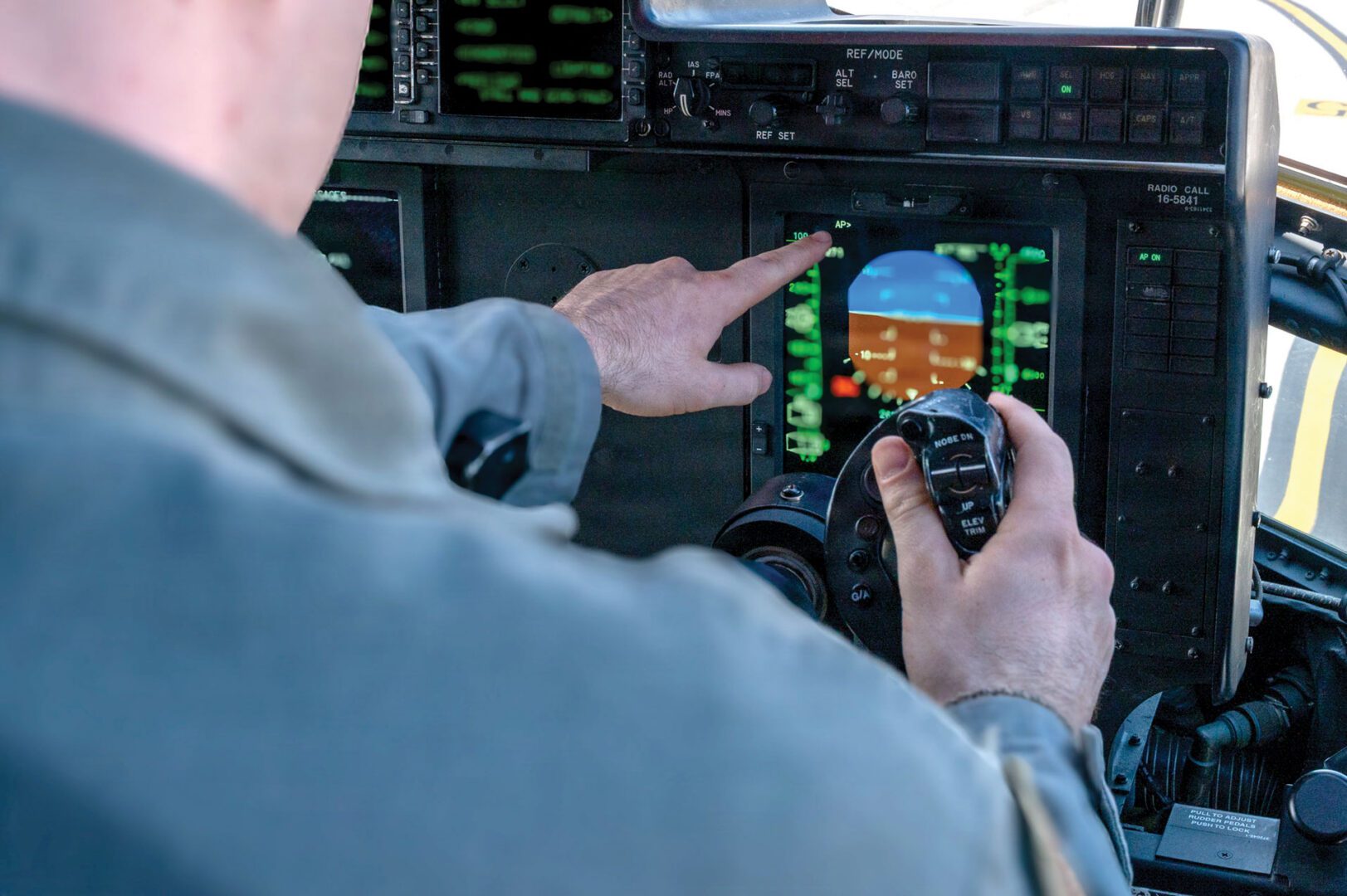
Aircraft Automation
By Mr. D.J. Hernandez III, AMC Flight Safety
One of Merriam-Webster Dictionary’s definitions of automation is “automatically controlled operation of an apparatus, process, or system by mechanical or electronic devices that take the place of human labor.”
Aircraft automation is promising a future of enhanced safety, efficiency, and streamlined operations. From the aircraft to the flightline and to the maintenance hangar, intelligent systems are taking on complex tasks, helping to reduce the potential for human error while optimizing performance. However, new technologies bring new challenges.
Autopilot and advanced Flight Management Systems are standard, which help reduce pilot workload on long-haul flights and optimize routes for fuel efficiency and safety.
In maintenance, artificial intelligence (AI) is a game changer. Predictive maintenance systems analyze data from an aircraft’s sensors to forecast when repairs are needed. This analysis helps identify potential issues before they become critical. This proactive approach not only enhances safety by reducing the likelihood of inflight malfunctions but also minimizes costly downtime.
In flight, technologies like the Automatic Dependent Surveillance-Broadcast provide real-time aircraft tracking. This utility helps situational awareness for both pilots and controllers. However, the increasing reliance on automation is not without its concerns. A significant issue is the potential for degradation of manual flying skills and the risk of pilot complacency.
As pilots spend more time monitoring automated systems, their hands-on proficiency has the potential to diminish, which can be critical in emergencies where manual control is required. Today’s pilots are more systems monitors than systems operators.
Ultimately, the trajectory of aircraft automation is not about replacing human pilots but augmenting their capabilities. AI acts as a sophisticated copilot, handling routine tasks and providing critical data-driven insights. This innovation will allow pilots to focus on high-level decision-making and managing unexpected events to ensure flight safety.