
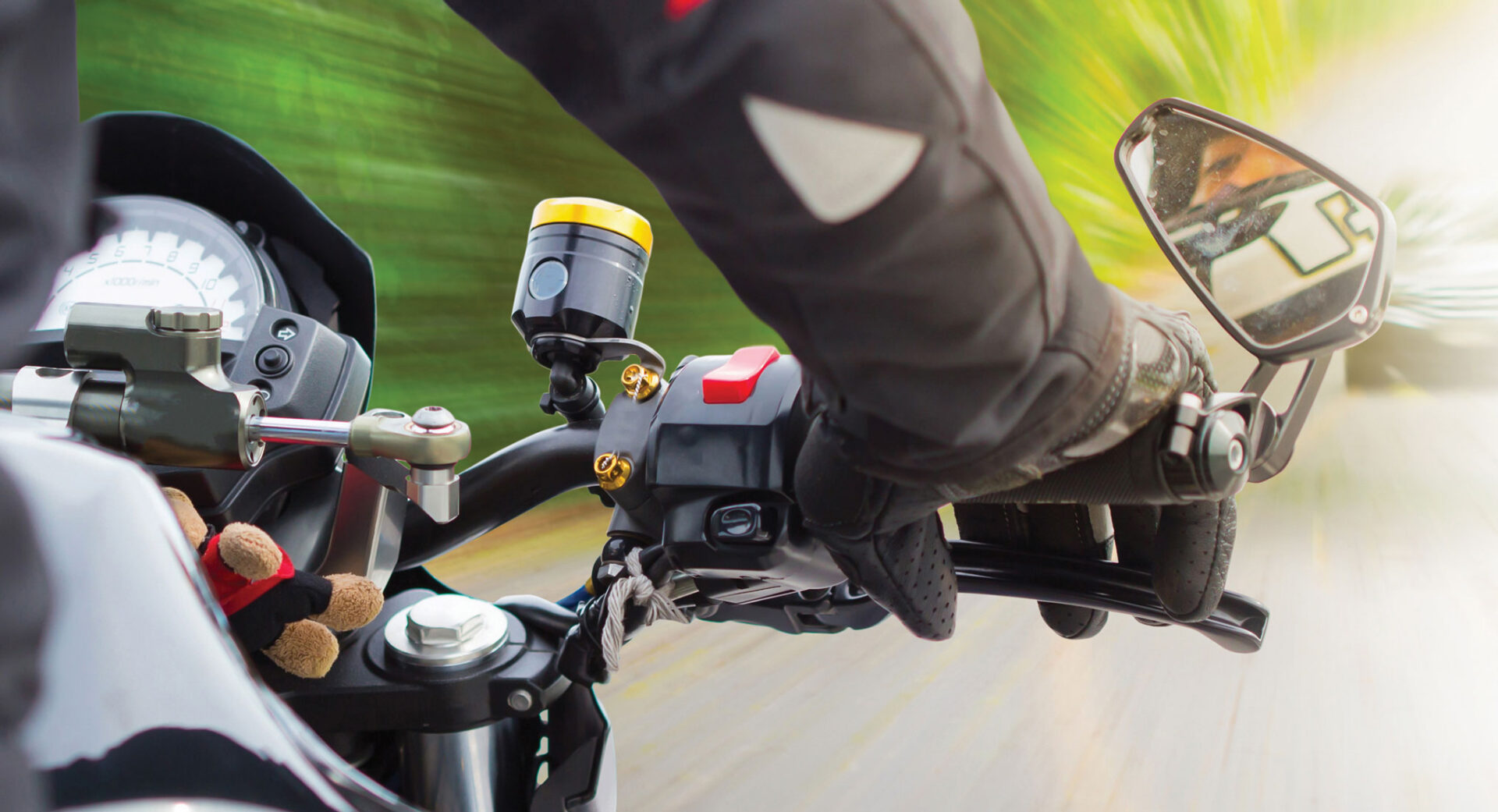
Common Motorcycle Blind Spot Mistakes
By Mr. Philip Russell, 628th Air Base Wing, Joint Base Charleston, SC
Why Blind Spots Matter
Blind spots exist in every vehicle, but they pose a particular risk to motorcycles due to their smaller profile. Ignoring them increases the chance of sideswipe accidents, especially during lane changes or merging.
The following common mistakes, and tips to counter them, can help improve visibility and safety.
- Neglecting Shoulder Checks
Mirrors only tell part of the story. A quick head turn (shoulder check) fills in the gaps.
Do it early: Do not leave it until the last second.
Keep it smooth: Quick but steady, without losing control of the handlebars.
Make it a habit: Use shoulder checks alongside mirror checks for full awareness.
Tip: Always shoulder check before merging or changing lanes. - Riding in Other Drivers’ Blind Spots
If you cannot see a driver in their side mirror, they likely cannot see you.
Tip: Adjust your speed to move out of blind spots as quickly as possible. - Lingering Too Long
Staying in a blind spot turns you into a target. Even attentive drivers can miss you if you are in the wrong place at the wrong time.
Tip: Pass decisively or fall back to a visible position. - Riding in the Center of the Lane
The center is often the least visible place in a lane.
Tip: Position yourself to the left- or right-third of the lane, depending on visibility and traffic. - Adjusting Mirrors Incorrectly
Misaligned mirrors reduce your field of view and increase blind spot risks.
Adjust mirrors so you see less of your own bike and more of the surrounding lanes.
Double-check adjustments after bumps or maintenance.
Tip: Combine well-adjusted mirrors with consistent shoulder checks. - Using Your Lights Ineffectively
Motorcycles have fewer lights than cars, so you have to make them count.
Tip: Keep high beams on during the day and always signal turns or lane changes early. - Riding Too Fast at Night
Reduced visibility and feeling tired means you need to ride smarter—not faster.
Tip: Slow down, wear reflective gear, and ensure your lights are working.
Bonus: Tech That Helps
- Blind spot sensors alert you to nearby vehicles.
- Smart mirrors give visual signals
of approaching traffic. - Helmet displays can project rear views directly into your line of sight.
Tip: Use tech as a backup, not a replacement, for situational awareness.
Passenger Awareness
- When riding two-up, blind spots shift. Make sure your passenger:
- Knows how to check mirrors from their angle.
- Uses simple verbal or hand cues to communicate.
- Helps spot potential hazards and alerts you to them.
Tip: Brief your passenger before every ride on their role in safety.
Final Thoughts
Avoiding blind spot mistakes is not just good practice, it is lifesaving. Whether it is a proper shoulder check or using reflective gear, every detail counts when it comes to motorcycle safety. Ride smart, stay visible, and never assume other drivers can see you. Combine frequent mirror glances with quick shoulder checks. Do not rely on mirrors alone. Most blind spots are at the forty-five-degree angle behind your shoulders. Adjust your mirrors to reduce these and check them often. Pass swiftly, do not linger. If you cannot see the driver in their mirror, they probably cannot see you. Ride at a safe speed! Higher speeds mean less time to react. Maintain a speed that allows you to scan your surroundings safely.
Do not put your safety in the hands of others!
| Common Blind Spot Mistake | Main Points | Tip |
| Not Checking Mirrors Frequently | Reduces awareness of surrounding traffic and developing threats. | Adopt a scan pattern: check mirrors every five to seven seconds and always before any change in speed or position. |
| Not Turning Your Head | Leaves you ignorant of vehicles in the most critical blind spot zones. | Always supplement mirror checks with a decisive “lifesaver” shoulder glance before committing to a move. |
| Incorrectly Positioning in Lane | Makes riders less visible and limits escape routes. | Dominate your lane. Use different lane positions (e.g., left, right, and center) to see, be seen, and create a safety buffer. |
| Neglecting Indicators | Confuses or surprises other road users, leading to unpredictable reactions. | Signal clearly, early, and ensure your signal is canceled after the maneuver. A forgotten signal is a false promise. |
| Wearing Low-Visibility Gear | Allows the rider to blend into the visual noise of the road and background. | Invest in high-visibility and retro-reflective gear. Bright colors work best in daylight; reflective materials are crucial at night. |
| Overestimating Driver Awareness | Assuming other drivers see you is a gamble you cannot afford to take. | Ride with the assumption that you are invisible. This mindset keeps you proactive rather than reactive. |