
Train Harder Than the Fight: Maj Gen Cole on Readiness, Risk, and Resilient Airmen
By Ms. Lauren Fosnot, Staff Writer
History shows that the greatest breakthroughs come when someone pushes beyond what was once considered the limit, from the first supersonic flight with U.S. Air Force Capt Charles Yeager in 1947 to recent missions that redefined mobility operations, including OPERATION ENDURING FREEDOM, which demonstrated the ability to maintain around-the-clock, high-volume, intra-theater logistics.
Progress has always belonged to those willing to exceed expectations.
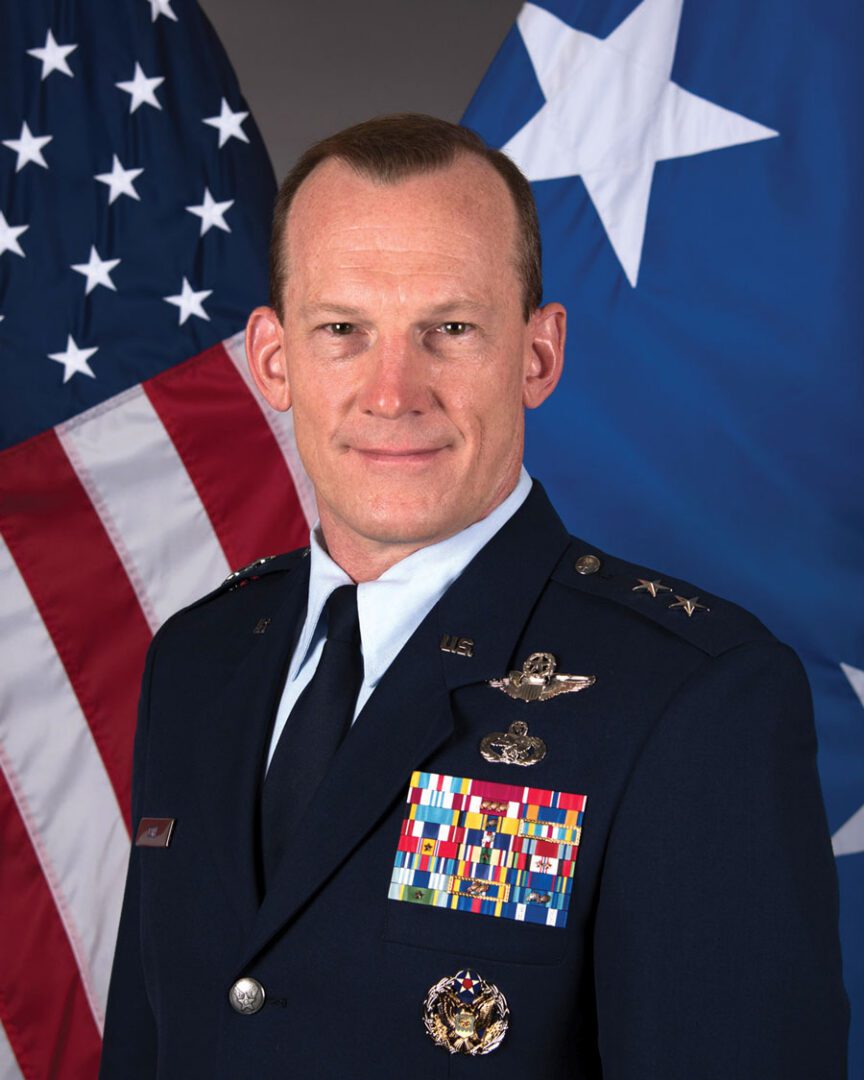
For Maj Gen Darren R. Cole, readiness is about surpassing perceived limits—training beyond comfort, building confidence through adversity, and preparing Airmen to meet and exceed the demands of the fight.
His leadership philosophy was not shaped by a single assignment or defining moment, but by a conglomeration of experiences. Those experiences mostly centered on helping others grow through challenges, and cemented his conviction on the potential that lies within every Airman. “I think all Airmen—and people, in general—are more capable than we realize. Challenges are what help us grow and build lasting confidence. In the military, we’re all going to face adversity—but we’ll overcome it together.”
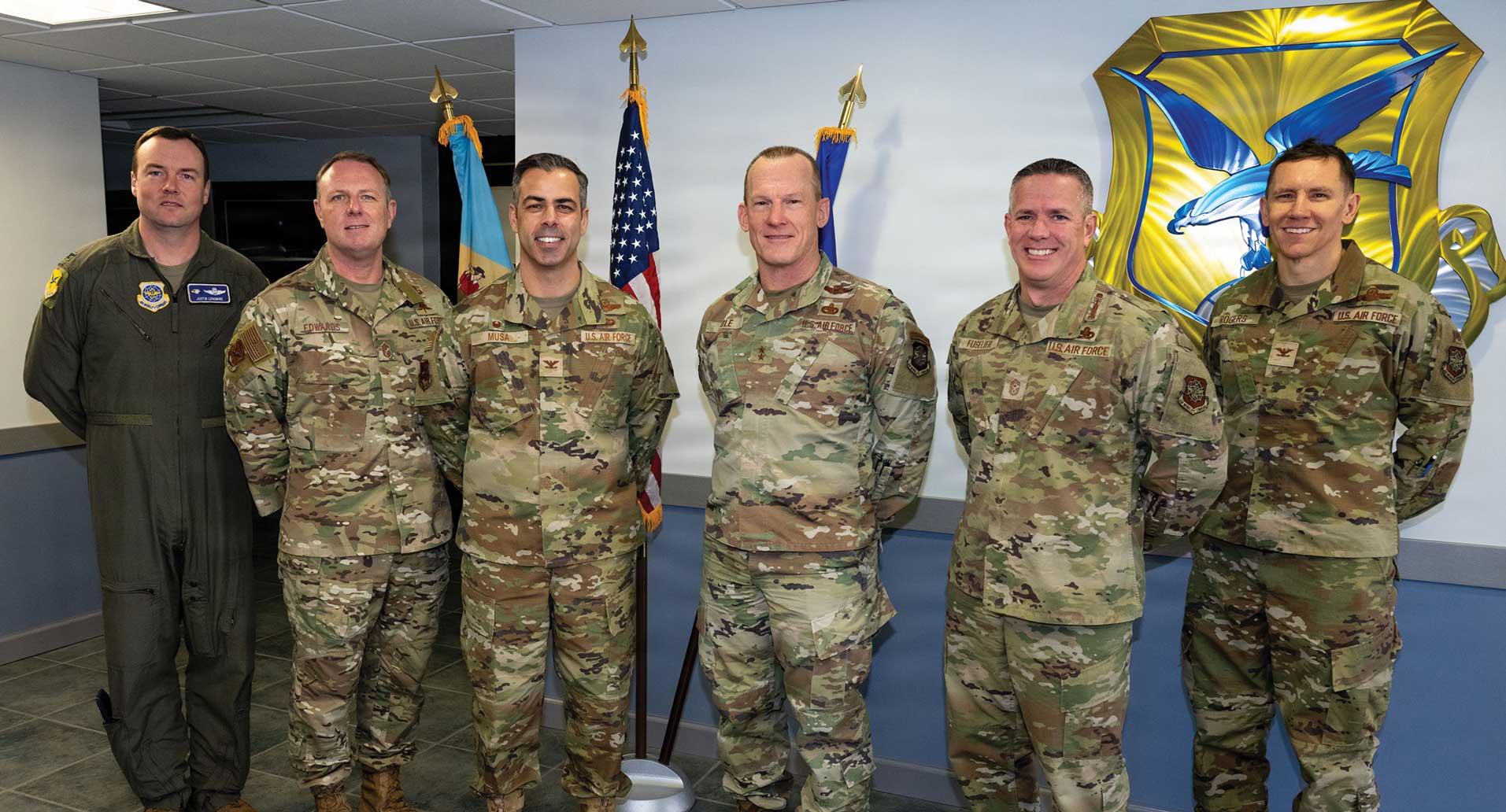
That belief now guides how he leads the 21st Air Force and U.S. Air Force Expeditionary Center, with the expectation that readiness is built by pushing beyond what seems possible.
Building Resilient, Mission-Ready Airmen
Cole’s priorities boil down to three straightforward principles:
- Build resilient, mission-ready Airmen and Air Expeditionary Wings.
- Generate readiness.
- Continuously improve the mission.
“My overall philosophy is to train hard, exercise hard, and build the readiness to win,” he said. Building resiliency, as Cole described, begins with fundamentals that focus on fitness in all its aspects, sharpening technical skills, and committing to ongoing professional development to ensure each Airman is prepared for seen and unforeseen demands. This foundation supports his second principle: generating readiness. Cole emphasized a strong focus on the Air Force Force Generation deployment model and leveraging large-scale exercises (e.g., Storm Flag and the Department Level Exercise) to strengthen and validate capabilities.
Acting alongside adaptability and readiness is continuous improvement. “Once we’ve built resilient Airmen, my focus then is on innovating through technology and process improvement,” he explained. These efforts are also nested within Air Mobility Command’s broader strategy and directly support Airmen, the mission, and the command’s key lines of effort.
Safety as a Foundation
Military operations are inherently complex, involving unpredictable, ambiguous, and often rapidly changing elements. As complexity increases, safety remains paramount. “Safety is definitely foundational,” Cole stressed. “I never want to do the enemy’s job for them and take resources off the battlefield.”
To maintain this foundation, operational risk management (ORM) is embedded into daily operations. For instance, “The ORM process plays out in an aircrew’s pre-flight briefing. They review their individual ORM, and then the Aircraft Commander puts that together into how they are equipped to go do their job that day,” he explained.
But process alone is not enough; leadership is essential to ensure safety measures actually work in practice. “We’ve got to follow up that individual ORM process with very present leadership engagement to check on those processes, how they’re working, and to see if our Airmen look like they’re performing normally or if something is out of condition and might need some more attention.”
Innovating the Future Fight
Tools and evolving operational concepts are reshaping how the force builds and sustains readiness. “Technology, innovation, and evolving concepts are really kind of defining where we are at as a service,” Cole said.
Across the command, exercises are no longer exclusively training events; exercises are proving grounds. Leaders are increasingly using the events to prototype and refine concepts in combat-representative environments before those capabilities are needed in real-world operations. “Some really good examples that have come out of that are Rapid Dragon, as well as advancements in beyond line-of-sight connectivity and smaller equipment [Unit Type Codes] that make us much more agile and responsive—driven by current and future threat environments.”
At the staff level, exercise planning and data analytics are improving how limited resources are optimized. “We’re making great strides in exercise planning in order to optimize limited resources and get predictive in our ability to look at readiness via data analytics,” Cole explained.
The long-term goal is to better align and schedule efforts across major commands so mission generation force elements can be combined into larger Air Expeditionary Wing exercises, maximizing valuable training time.
Every Airman Is a Risk Manager
Looking ahead, Cole’s message to mobility Airmen is clear: everyone is responsible. “Every Airman [plays] a very direct role in readiness and mission success,” he stated. “Preparation, discipline, and professionalism make a huge difference at every level.” This standard means training will be demanding, as readiness is not built in comfort. “Know that I’m going to train them harder than the fight,” Cole continued.
Every Airman must also think critically about risk, with each assuming the role of a Risk Manager. From Cole’s perspective, open, transparent communication is what makes that possible; clear dialogue across the force allows units to push harder in training and maintain the discipline required to execute operations safely and effectively.
The balance of resiliency, readiness, responsibility, improvement, and safety underpins Cole’s broader philosophy: prepare rigorously, lead with discipline, and build Airmen who are ready—to maneuver to win.