
Back to Basics: Brig. Gen. Derek M. Salmi on Discipline, Risk, and Readiness
By Ms. Lauren Fosnot, Staff Writer
After Hurricane Andrew devastated South Florida in 1992, entire neighborhoods were flattened—roofs were torn off, walls collapsed, and homes and businesses were reduced to debris.
But investigators noticed something striking occurred: a small number of houses remained standing.
When engineers looked closer at why, the answer was not luck. The homes had reinforced connections, secure foundations, and were built with stricter adherence to building codes. Under normal conditions, those details may have gone unnoticed. Under extreme pressure, those details made all the difference.
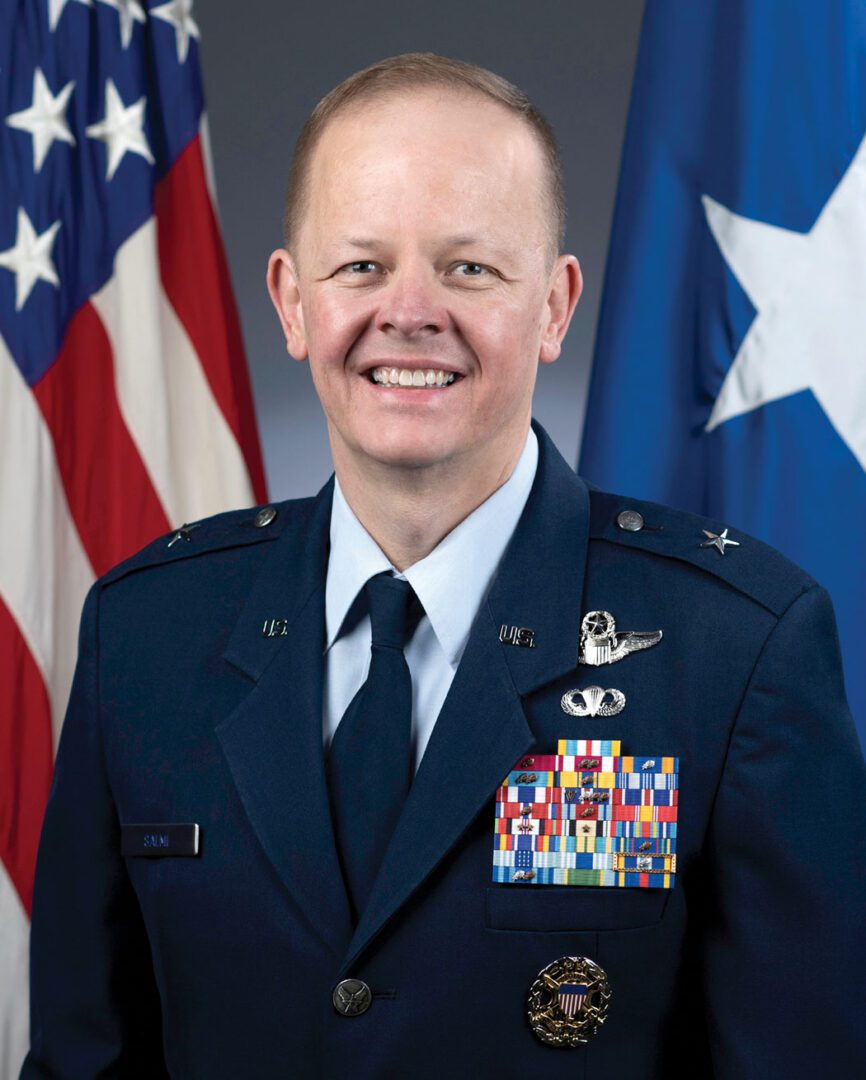
For Brig. Gen. Derek M. Salmi, Director of Operations, Strategic Deterrence, and Nuclear Integration at Air Mobility Command (AMC), readiness is built the same way—by strengthening the details, or fundamentals, long before they are tested.
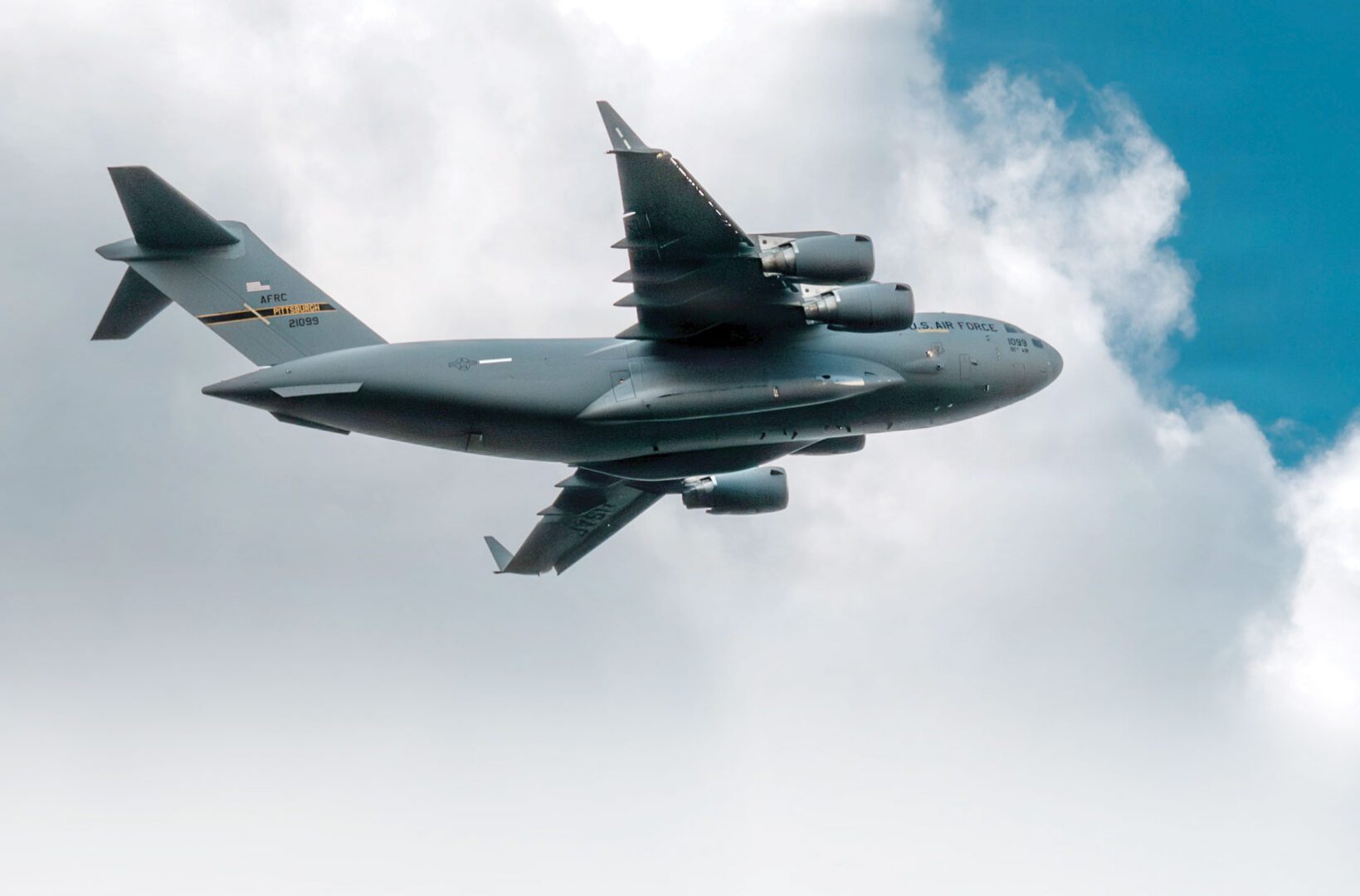
As the maneuver force for the Joint Force, AMC plays a critical role across airlift, air refueling, aeromedical evacuation, global air mobility support, and command and control. “The Joint Force does not move without AMC,” Salmi said. “We take our role in that very seriously.”
That responsibility requires constant readiness—and, in Salmi’s view, a disciplined approach to risk and safety. “On any given day, we may be pulled in any number of different directions operationally,” he said. “But if we are not good at the fundamentals, if we don’t work hard each and every day to be good at those seemingly basic parts of our jobs… then we can’t be where we need to be when we’re called upon by the Joint Force.” This focus on what Salmi describes as “basic blocking and tackling” paired with an integrated risk management approach, underpins how he sees safety evolving across the command.
Over the past year, AMC’s global operations—from exercises in the Pacific to missions across multiple combatant commands—have reinforced its role as a credible and agile force. “We can operate literally all over the globe and in really high-intensity operations,” Salmi said. “From the outside looking in, it may look a little bit seamless, it may look a lot easier than it actually is. But when we do so, we build credibility in what we can bring for the Joint Force.”
That credibility, he emphasized, is foundational. “That’s really the cornerstone of deterrence.”
At the individual level, Salmi’s message to Airmen is equally direct: discipline matters. “I would ask Airmen to focus on just bringing discipline to their job each and every day,” he said.
Influenced early in his career by the concept of “flight discipline,” Salmi described discipline not in terms of punishment but as a mindset—one that shapes how Airmen prepare, assess risk, and continuously improve.
“It’s how you prepare. It’s how you use all the resources you have, how you try to identify what threats might be out there and how you can mitigate those threats,” he said. “Global air mobility operations are dynamic and, at times, very dangerous. But by applying discipline in how we approach these operations, in turn,
sets us up better for success.”
Such discipline is not developed in isolation. Salmi highlighted mentorship as a key driver of a strong safety culture.
“I’ve really found the most effective mentorship is thirty seconds at a time,” he said. “Along the lines of, ‘Hey, this really worked out well for me,’ or, ‘Did you think about this?’ or, ‘Here’s where something really went sideways—so don’t do this.’”
When it comes to training, Salmi does not anticipate major shifts in focus, even amid broader changes across the Department of War. Instead, he expects training to evolve based on real-world operational experience. “We’re currently asking Airmen to serve in a very dynamic environment and one that has risks that are very different than what any of us have experienced before,” he said. “So, I think we’re going to count on those Airmen to really help us evaluate how we train going forward.”
Across all operational areas, one theme remains constant: integration of risk and readiness. “Risk and readiness go hand in hand,” Salmi said. “The best organizations demonstrate that ability to integrate risk and readiness into everything that they do.”
He noted a proactive approach—identifying risks early and building training and operations to mitigate them—as essential to mission success. Drawing on a framework of “requirements, resources, and risk,” he highlighted how readiness directly influences the level of risk a unit can effectively manage.
Salmi’s experiences reinforce that perspective. Reflecting on his time as a Wing Chief of Safety, he emphasized the value of proactive, engaging safety programs that not only communicate expectations but also build community and trust.
He also recalled a deployment early in his career where strong crew coordination and open communication made the difference in a high-risk environment. In that instance, a boom operator identified a ground hazard that might otherwise have been missed—an example, he said, of how empowered teams and disciplined execution contribute directly to safety.
Ultimately, Salmi believes the most effective safety cultures are those that look forward, not backward. “I would always ask my safety teams, ‘Where do we think the next mishap is going to happen?’” That question, he explained, encourages critical thinking, situational awareness, and a proactive mindset, shifting safety from a reactive function to an integrated part of mission planning and execution.
“The bottom line,” Salmi said, “is trying to take a proactive approach to safety—not just bolting it on at the end… but really incorporating it into everything you do.” Because when pressure comes—whether from a storm or a high-risk mission—success is not a matter of luck. Success is the result of a strong foundation built long before it is tested.