
Reducing Flightline Mishaps Through Process Improvement
By 1 Lt Christopher Winters and SMSgt James Lee, U.S. Air Force
Personnel stationed at the 730th Air Mobility Squadron (730 AMS) at Yokota Air Base (AB), Japan, may receive from others a sympathizing nod of approval, a sign of understanding, or implied respect. In the Pacific Area of Responsibility, Yokota AB is a central hub for logistics, one that has been tested more than ever in the past decade as geopolitical tensions have risen. As a tenant unit on the installation, 730 AMS serves as a hub for receiving cargo, breaking down cargo for shipment across the country, and dispatching cargo in a timely manner. In short, 730 AMS Airmen are cargo specialists. In 2025 alone, 730 AMS supported nearly six thousand missions, including cargo handling for Presidential and Secretary of War trade negotiations. With so many moving pieces in this unit, being keenly astute to one’s immediate surroundings is an absolute requirement—otherwise, operations can quickly go astray.
During the summer of 2025, the aerial port at 730 AMS experienced its most dramatic surge in months. In July, mission workloads increased seventy-nine percent from the previous month before returning to baseline. From September to October, another seventy-five percent increase followed—both surges more than doubling typical workloads. In July, Tokyo also experienced its hottest summer on record, with an average temperature of 92 degrees Fahrenheit.[1] As operations and temperatures rose, critical incidents involving personnel and equipment rose as well.
Over the past year, considerable time and mental and physical effort have been dedicated to improving safety within the unit. Although the work performed by 730 AMS Airmen is inherently dangerous, mishaps are not justified as the cost of business. The team leverages process improvement techniques to better understand why events unfold as they do. Understanding the human behaviors that contribute to mishaps allows leaders to adjust processes and provide Airmen options to reduce overall risk. (When Airmen are forced to choose between two poor options, the process has already failed.)
Two major projects were undertaken to reduce the risk of mishaps on the flightline. Both initiatives were designed to provide Airmen working with cargo in warehouses with additional structure as they conduct flightline operations.
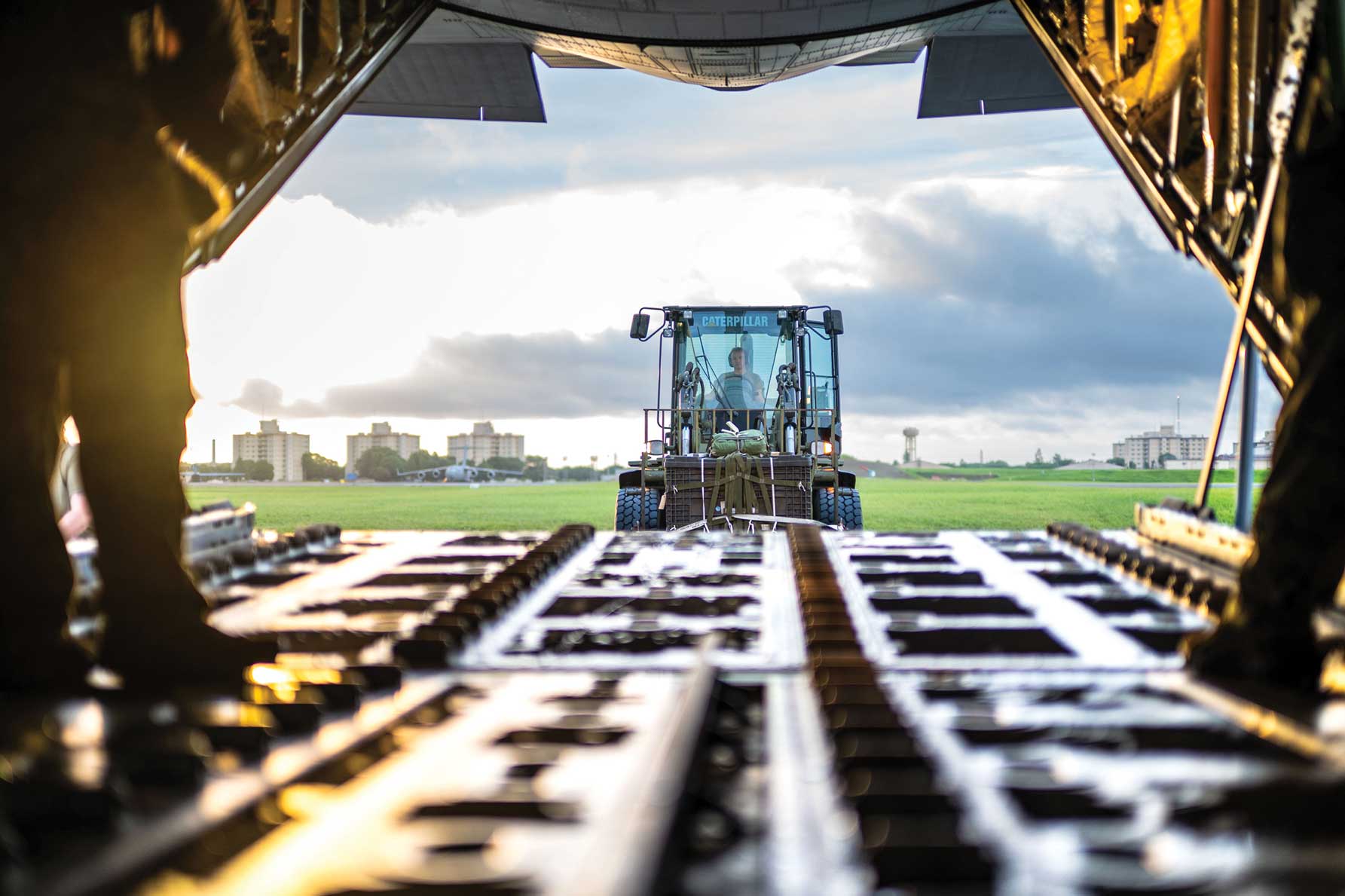
The Tunner 60K Aircraft Cargo Loader/Transporter, a vital piece of equipment used by Aerial Transportation Specialists to palletize cargo from staging areas to aircraft, weighs approximately sixty-five thousand pounds and measures fifty feet in length. With twenty wheels and a massive diesel engine, it is the crux of Air Force cargo operations. Accompanying the Tunner 60K Aircraft Cargo Loader/Transporter is the load team, a four-person squad responsible for uploading and downloading the cargo.
To address and counter the number of mishaps, 730 AMS leadership created a local operating instruction that is more restrictive than current Air Force guidance, providing Airmen with clearer procedures for cargo movement. Root-cause analyses revealed a lack of standardized, process-driven activities, which led to guesswork and, ultimately, mishaps. The local instruction now includes a chronological checklist for load teams, with clearly defined roles for each team member before operations begin. The checklist also prompts team leads to conduct a miniaturized risk assessment matrix to prime the team for flightline conditions. Further, the checklist was translated into Japanese to ensure host-nation partners could follow the procedures with the same clarity and consistency. In the three months since implementation, the 730 AMS aerial port has reduced loader-related mishaps by eighty percent.
The second project stemmed from a string of personnel mishaps and the realization that the field of aerial transportation lacks a dedicated human factors course. Equipping flightline personnel with critical thinking skills enables more informed decision-making and reduces the occurrence of mishaps. Developed over three months, a six-person team from 730 AMS created an eight-hour course examining mishap data, peer-reviewed research, and current Air Force Instruction. The course incorporates risk management principles outlined in DAFI 90-802, as well as workflow management, holistic health (e.g., getting adequate sleep before a twelve-hour shift), and personal protective equipment (e.g., hearing protection). One of the course’s instructors, a technical sergeant in his early thirties who recently began wearing hearing aids after years of hearing loss, provides a powerful real-world example of the long-term consequences of risk exposure.
The goal of the course is to teach Airmen critical thinking skills to help them make informed decisions under stress, build confidence, and take appropriate action to prevent mishaps. More importantly, it reinforces a cultural shift—one where safety is not reactive, but proactive and embedded into every aspect of the mission.
Reducing flightline mishaps requires more than enforcing compliance. By combining structured processes with human performance-focused training, 730 AMS is helping ensure Airmen are not only prepared to execute the mission but to do so safely and with resilience.
[1] https://www.data.jma.go.jp/stats/etrn/view/monthly_s3_en.php?block_no=47662&view=2