
Arc to Final
By Col John B. Kelley, Director of Safety, Air Mobility Command
The journey from beginner and novice to expert and instructor in a skill is an interesting arc that we all experience throughout our lives, often multiple times. Within a relatively short time, Airmen achieve a high level of proficiency in their chosen specialty. After proficiency and mastery has been achieved, it can be difficult to look back at earlier phases of your career and wonder how you once struggled mightily with a skill you now take for granted. My own flying career has followed this model.
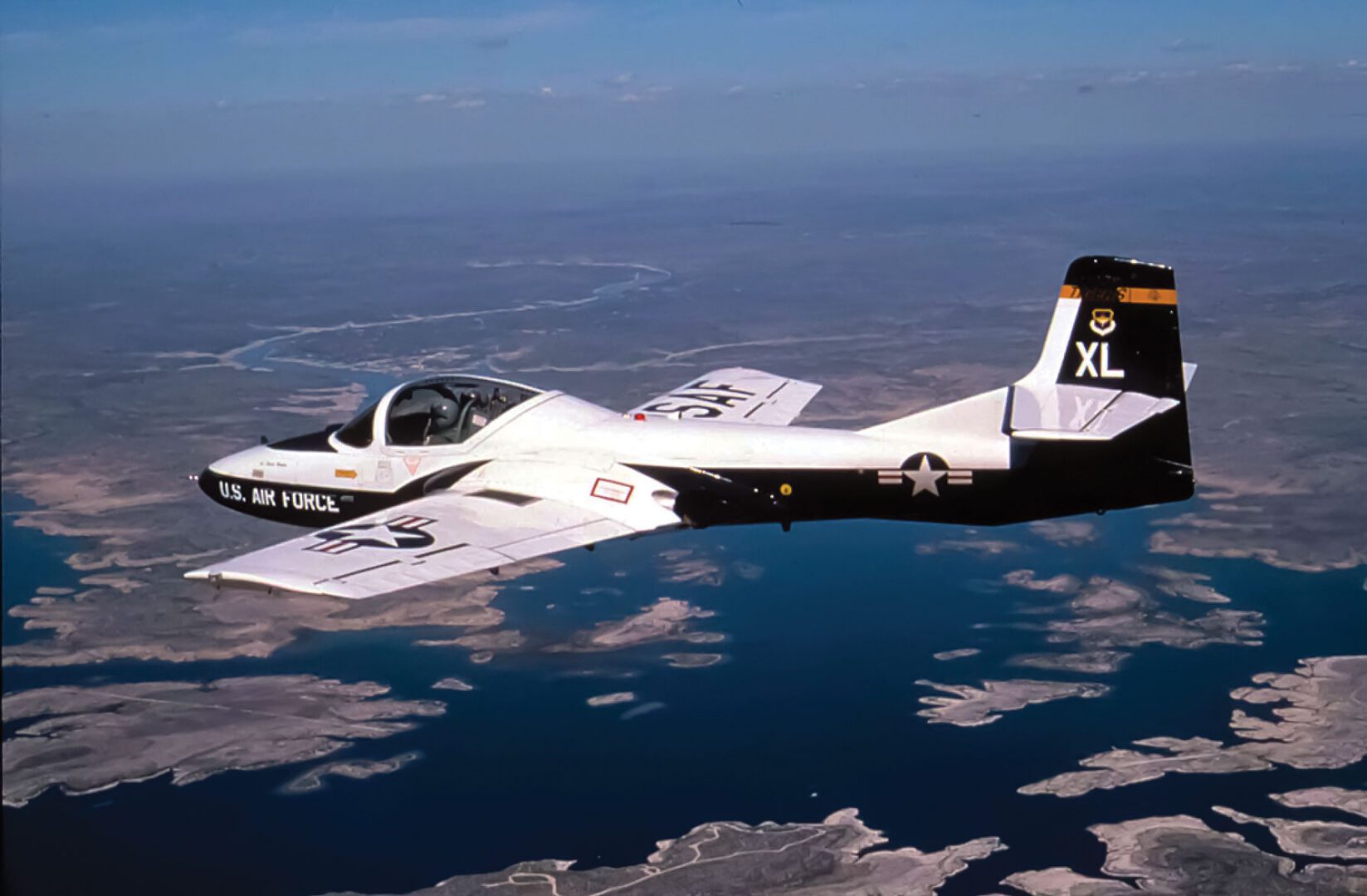
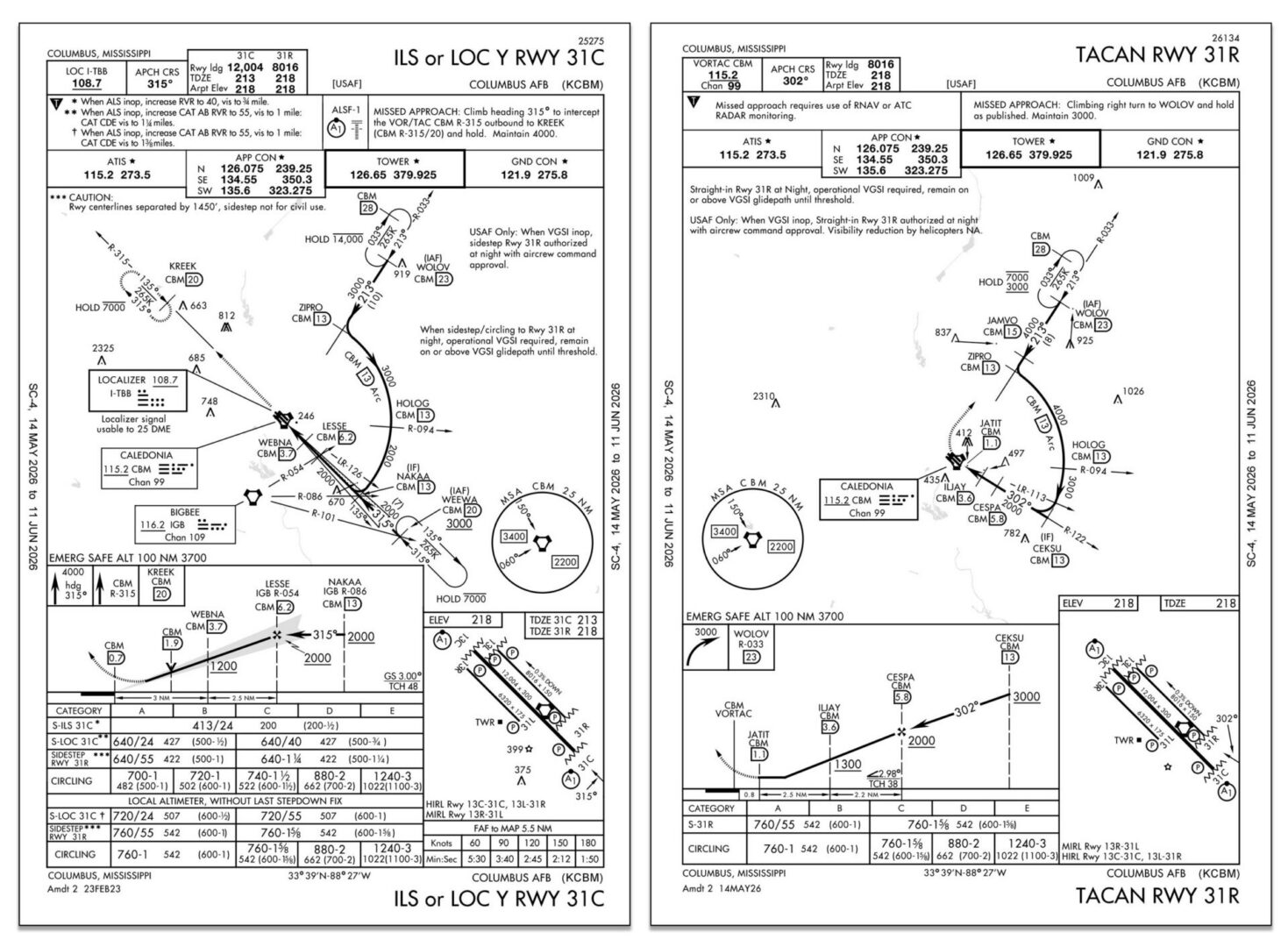
Back in the deep recesses of time, when I was learning to fly the venerable Cessna T-37B, one of the early complicated procedures I encountered was the arc-to-final instrument approach. This procedure allows an aircraft that is not aligned with the runway to smoothly intercept a large circular path around an airport and maintain that arc while descending below the clouds. When the aircraft is nearly aligned with the runway, the pilot makes a quick turn to the final approach course for landing.
In theory, this procedure is designed to lower an aviator’s workload and make things easier. However, to a young pilot trainee, it is the equivalent of flying the aircraft while solving a Rubik’s Cube and balancing on a greased beach ball. Inevitably, those first attempts were met with frustration, brain ache, and the repeated blows from an instructor pilot’s checklist against your helmet (or so the story goes … this definitely, positively didn’t happen to me). If I flew an arc-to-final approach now, it would be as routine as tying my shoes (or hitting a student with a checklist … which I would definitely, positively never do).
Mastery of the skill of safety is no different for any of us—including me. Airmen are introduced early to safe practices, whether in flying, confined spaces, explosives, or any of a dozen other disciplines. Yet true development of safety skills comes through on-the-job experience and, for some lucky individuals, assignment to a safety position. Over the course of my two-and-a-half years as Air Mobility Command’s (AMC) Chief Safety Officer, I have been granted the opportunity to learn and appreciate the safety profession in ways few others are afforded. During that time, I discovered several insights that all Safety Airmen can apply as they work to make a difference.
Having a Safety Mindset
For many Airmen, early encounters with safety principles involved learning how a task was “supposed” to be accomplished. That instruction may have been followed by guidance on how the task is “actually” performed in the shop or on the flight line. These two sets of instructions were likely not the same; the former emphasizing safety, the later prioritizing speed. The mindset in the work areas can sometimes become some version of the following: “The likelihood of a mishap is low and the pressure to perform the mission is high—if we take a few shortcuts, we go faster and the boss is happy.”
Young Airmen tend to take cues from more experienced personnel and emulate their practices to fit in and avoid being the rookie, the noob, or the “FNG.” Peer pressure is a real thing, from a brand-new Airman Basic to a salty old Colonel. If we are fortunate, experience teaches us the value of the safer procedure, even if it takes longer. Oftentimes, it is a “close call” or a “near hit” that turns us into zealots for the safer approach.
The mindset we ultimately need to impart to Airmen is this: safe mission execution enables combat readiness. A safety mindset accepts that Airmen will be under operational pressures to perform with speed and accuracy. It also recognizes that through a lack of safety discipline, mishaps, even relatively minor ones, can cancel out any operational advantage. Airmen with training, motivation, and discipline in safety procedures create a durable combat capability, one that can endure indefinitely. Once a safety mindset is adopted, innovation can begin to create safer and faster ways to accomplish the task and mission
Understanding Risk: A Life Hack
Before becoming AMC’s Director of Safety, I served at the 618th Air Operations Center here at Scott Air Force Base, IL, formerly called the Tanker Airlift Control Center (TACC). There, we viewed risk through the lens of rapid and timely execution of worldwide mobility missions. Risks we managed for crews included weather, landing conditions, and access to rest and nutritious meals (that last item may sound minor, but trust me when I say one poorly chosen gas-station sushi dinner by a crew will one hundred percent delay a mission by at least a day!). When I transitioned to AMC Safety, my appreciation and understanding of risk broadened considerably.
Every day, we are confronted with risk, both in our personal and professional lives. Longtime readers of The Mobility Forum are familiar with the concepts of intrinsic and extrinsic risk. Risk, at its core, is the product of the severity of a poor outcome (negligible, moderate, critical, or catastrophic) and the frequency of that outcome (rarely, seldom, occasional, likely, or frequently). Once an Airman develops the ability to make decisions informed by risk, their view of the world and the actions they take change for the better. This risk-based decision skill extends beyond safety, it informs countless other areas of life, from retirement investing (Pokémon cards versus a Roth Individual Retirement Account) to fashion and hairstyles (at-home coloring vs. salon coloring.) Not all risks can be avoided; yet changing how you think about risk and make decisions based on that thinking can make an extraordinary difference.
Being Interested and Caring
Many years ago, I served with a Chief Master Sergeant who often spoke about the day he enlisted in the U.S. Air Force and the day he joined the Air Force. Squadron members would ask why those were not the same day. His answer was simple: he enlisted for what the Air Force could do for him, but he joined on the day he began caring about what he could do for the Air Force. For him, the turning point came when it stopped being “the” Air Force and became “his” Air Force. That admission was a powerful validation, as I had recently “joined” the Air Force as well. In the safety world, this revelation frees you to embrace the safety role, be a vigorous advocate for safety, and be enthusiastic when discussing it.
Safety, as an enterprise, needs its advocates and cheerleaders at every level and echelon; it needs Airmen who can embrace the safety calling, be outspoken, and be inclusive. This may not make an individual the coolest Airman, but it may secure your spot as the most trusted. A running joke with my staff, after I deliver an impassioned safety speech, is that I can no longer be “cool,” I can only be “interesting.” However, I’ve recently changed “interesting” to “be interested”—that is, be interested in Airmen doing the job and the challenges they face. When safety professionals go into the field and are genuinely interested and caring, they are rewarded with deeper insights into our safety climate and culture. These interactions also fortify the trust Airmen have in their leadership to keep them safe and operating at their highest level.
Short Final
There you have it, a short list of touchstones and observations from my tenure as your AMC Director of Safety. Like any good story arc, or arc-to-final approach, the journey hasn’t always been easy, but it has been rewarding, and we’ve emerged from the clouds in a safer and better place.
Along the way, I’ve gained a profound appreciation for the safety enterprise and the members who endeavor to keep Airmen safe day after day, across all disciplines. Since this is my final article as Director of Safety, it seems fitting to thank all the AMC Safety staff for their trust in me, support, and incredible work over the years. I also owe Tatiana Torres and the Schatz Strategy Group staff enormous gratitude for their skill and dedication in making The Mobility Forum the premier safety publication in the Air Force.
And to all the AMC Safety Airmen out there—from Little Rock to McConnell, McChord to Dover, and everywhere in between—it has been a singular honor to be on this grand safety journey with you. Keep leading, keep caring, and Aim High!